
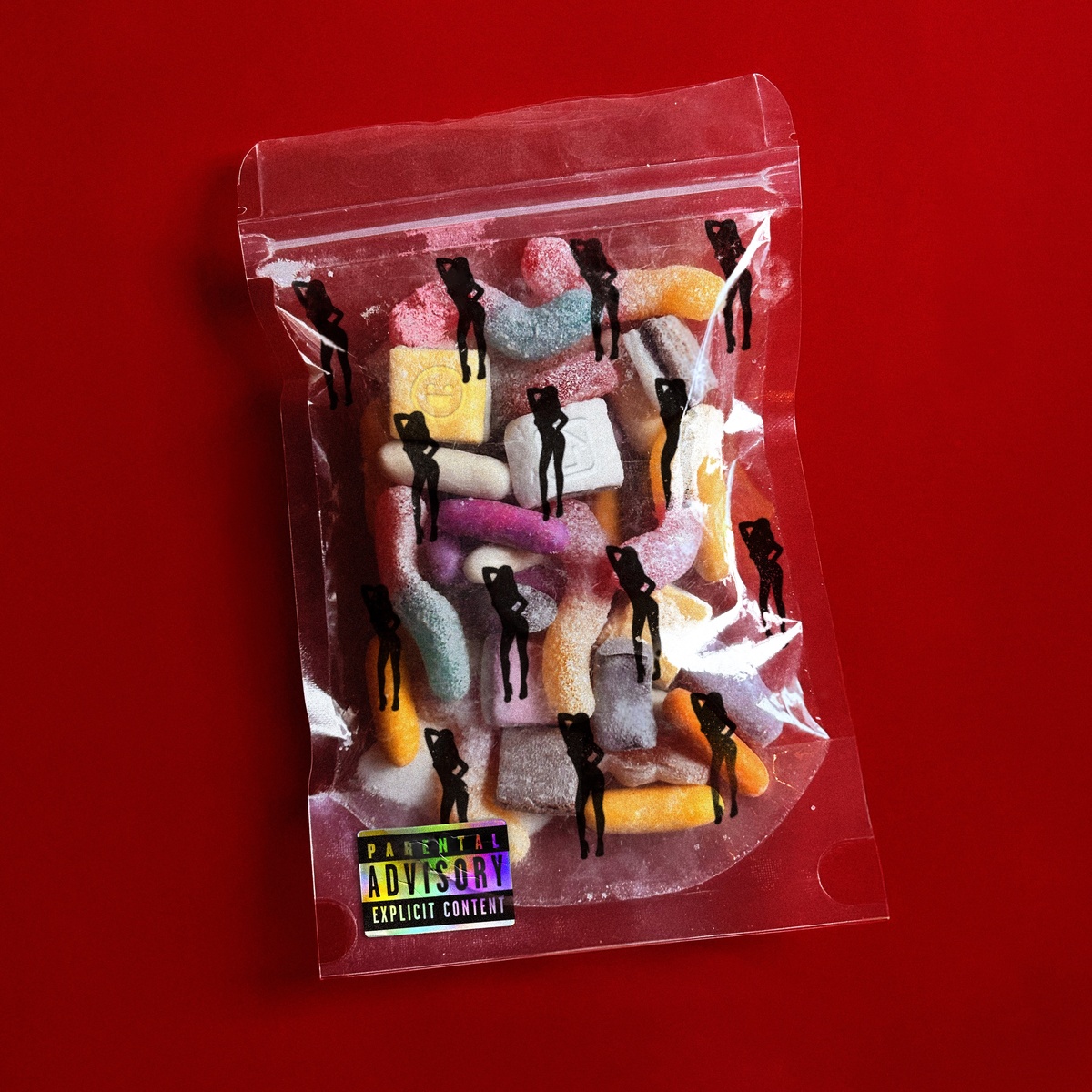

There’s something quietly defiant about releasing an EP where you barely rap. For an MC who once promised a Pyramid Stage crowd they were “witnessing greatness” — and meant it — to step back from the thing everyone knows you for isn’t retreat. It’s the kind of move only available to someone who’s already proven the point.
*Sugar Girl* arrives less than a year after *Lotus*, an album that carried the weight of a creative partnership ending. Where that record felt wounded and searching, this one feels unburdened. Four tracks, all produced by Jakwob — the same producer behind 2024’s club-leaning *Drop 7* — and none of them interested in reminding you that Little Simz is one of the best rappers alive. She knows you know.
Jakwob’s production pulls Simz deeper into electronic territory than she’s gone before. The palette is after-hours: hard basslines, skittering drums, strobing synths. It’s the sound of someone who’s been hosting DJ sets and decided to bring that energy into the booth. Opener “That’s a No No” sets the tone immediately — a heavy, almost industrial beat under autotuned vocals that snarl rather than flow. The refrain “day in, day out” cycles between verses like a mantra, a reminder that the work never stopped even when the sound changed. There’s a flavour of *Yeezus* in its weight, but filtered through London grit rather than Chicago provocation.
“Game On” brings JT into the fold and it’s the obvious standout — a drink-in-one-hand summer track built on laser-littered production and the kind of swagger that doesn’t need to convince you. JT’s been on a run of punchy affirmation anthems, and she’s at her sharpest here. The track debuted at Coachella with JT surprising the crowd onstage, and you can hear why it worked: it’s built for movement, for the moment when a set needs to lift.
“Open Arms” shifts gears entirely. DEELA, Lagos-born and London-based, repeats a Yoruba hook — “Ó yá, dìde, dìde, dìde” — “Come on, get up, get up, get up.” Afrobeat textures blend with soaring electronica, and the song mimics its own subject: the repetitive, exhausting hustle of striving, the loop of holding yourself to a standard that never lets up. It’s the EP’s emotional center, the track that tethers the bravado to something more human.
“Telephone” closes with 070 Shake, and it’s the only moment on the record where the armor comes off. Simz makes a case for being seen — “Don’t call your girl, call me” — and there’s something almost hollow in it, the quiet question of what all that greatness means when the person you want is with someone else. Shake’s searing guitar and bass twang, now almost a signature, give the track a haze that feels like the comedown after the rest of the EP’s sugar rush.
It’s worth noting what Simz is doing structurally here. Three of four tracks feature other women — JT, DEELA, 070 Shake — and the lone solo track buries her voice in distortion. This isn’t an album about lyrical dominance. It’s an EP about texture, about collaboration, about letting the production and the guests carry as much weight as the name on the cover. For an artist who spent years proving she belongs in every conversation about great rappers, there’s something genuinely confident about releasing a project where you step aside and let the music do the talking.
**Verdict**
*Sugar Girl* isn’t a statement album — it’s a flex disguised as a playground. Four tracks, no filler, a producer who understands exactly where she’s going, and the kind of creative freedom that only becomes available when you stop needing to prove anything. If this is what the post-*Lotus* era sounds like, it’s going to be fun to watch.
**Recommended If You Like:** Nia Archives, Shygirl, Yaeji, JT, 070 Shake, club-leaning rap that prioritizes texture over technicality.